 MINGNAN BIO | Sunyuan HK
MINGNAN BIO | Sunyuan HK
MINGNAN BIO | Sunyuan HK
100% Self-Grown Raw Materials · E163 Anthocyanins
As a premier radish red color E163 manufacturer in China, Mingnan Bio extracts 100% plantation-sourced Raphanus sativus L. pigments. Delivering natural radish red color λmax 520nm with color value 93 E(1%, 1cm, 520nm), customizable absorption peaks (λmax 470–550nm), and high-acylated Purple Radish extracts. Exported globally via Sunyuan (Hong Kong).
Scientific Overview
Radish Red is a pure natural, water-soluble anthocyanin pigment derived from Raphanus sativus L. roots. Rich in acylated pelargonidin radish red color glycosides (pelargonidin-3-sophoroside-5-glucoside acylated with p-coumaric acid), it offers significantly superior thermal and light resistance compared to standard berry pigments.
As a specialized purple radish anthocyanin extract supplier and China natural food color manufacturer, Mingnan Bio has cultivated proprietary purple radish cultivars rich in high anthocyanin content and acylated structures, delivering natural pigment solutions with exceptional thermal stability.
Cultivated on Mingnan Bio farms
Instant dissolution in beverage systems
Elevated heat & retort stability
Zero synthetic dye blending
100% Self-Owned Farm-to-Factory Integration
Mingnan Bio operates 2000+ mu of dedicated radish plantations in China. Formulated as a premier radish red pigment heat stable beverage colorant, our extracts withstand HTST, UHT (135°C / 4s), and retort pasteurization without shade loss. Before every shipment, we attach a batch-specific pesticide residue test report issued by an authoritative third-party testing laboratory alongside food-grade ethanol solvent extraction logs.
Spectrum Engineering
By cultivating specialized radish cultivars, Mingnan Bio provides exact maximum absorption peak values to match your specific target shade requirements under spectrophotometric analysis.
Flagship Grade (Color Value 93). Bright strawberry & cherry red. Excellent acid stability. The industry standard for beverages and confectionery.
Deep ruby red profile with longer wavelength absorption. Perfect for meat alternatives, berry jellies, and fruit preparations.
Purple Strain Variety. Shorter wavelength absorption delivering natural violet-purple tones for functional beverages and candies.
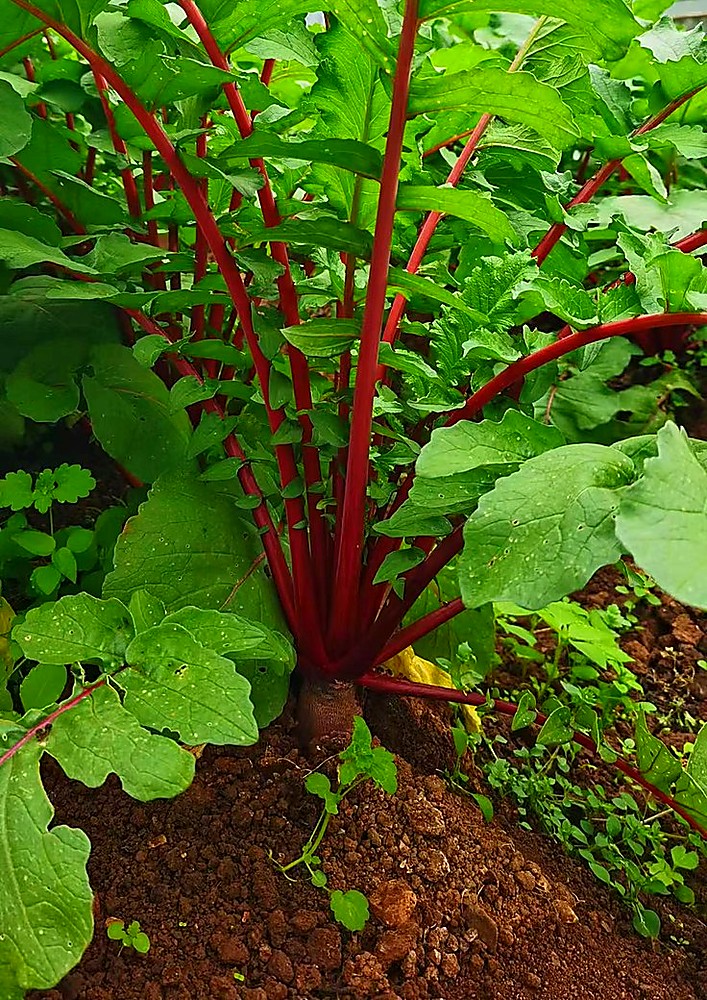
Because Mingnan Bio breeds and cultivates 100% of its own radish raw materials in China, our agricultural scientists have developed 5 distinct Red Radish cultivars and 2 Purple Radish cultivars.
Each variety produces specific acylated anthocyanin molecular structures, yielding tailored maximum absorption peaks (λmax from 470nm to 535nm). This allows food and beverage formulators to achieve exact target shades—from bright strawberry red to royal purple—without synthetic dye blending.
Technical Data Sheet (TDS) & MSDS
As a certified radish red E163 TDS MSDS manufacturer, Mingnan Bio provides complete physicochemical testing parameters, GHS material safety sheets, heavy metal compliance, and batch pesticide residue reports for food industry auditors.
| Product Name | Radish Red Color (E163) & Purple Radish Extract Powder / Liquid |
|---|---|
| Botanical Origin | Raphanus sativus L. root (100% self-owned China plantations) |
| Manufacturing Entity | Mingnan Bio-Tech Co., Ltd. (China) |
| Global Export Agent | SUNYUAN(HONGKONG)INDUSTRIAL CO.,LTD |
| Active Component | Acylated Pelargonidin & Cyanidin Anthocyanin Glycosides |
| CAS / INS / EEC | CAS: 84649-98-9 | INS: 163i | EEC: E-163 |
| Flagship Color Value | E(1%, 1cm, 520nm) = 93 (Powder) | 30 – 50 (Liquid Concentrate) |
| Absorption Peaks (λmax) | 470nm, 490nm, 515nm, 520nm, 525nm, 535nm |
| Optimum pH Matrix | pH 2.0 – 4.0 (Vivid Strawberry/Ruby Red) | pH 4.5 – 5.5 (Purple-Red) |
| Heat & Processing Resistance | Withstands HTST, UHT (135°C / 4s), retort, and baking temperatures |
| Solubility | 100% soluble in water and aqueous alcohol; insoluble in oils |
| Pesticide Residue Control | Standardized management + Batch 3rd-party lab residue test report with every shipment |
| Solvent Purity | Extracted using food-grade ethanol solvent |
| Heavy Metals | Lead (Pb) ≤ 2.0 mg/kg | Arsenic (As) ≤ 1.0 mg/kg | Mercury (Hg) ≤ 0.1 mg/kg |
| Microbial Limits | Total Plate Count < 1000 CFU/g | Coliforms < 30 MPN/100g | Salmonella: Negative/25g |
| GHS Safety Classification | Non-hazardous natural food ingredient (MSDS Class: Non-dangerous cargo) |
| Certifications | ISO 9001, HACCP, Halal, Kosher, FSSC 22000, Clean Label Certified |
Technical Application R&D
Our application team works directly with your food scientists to evaluate pigment reactions under different acidity, alkalinity, and thermal processing cycles.
At pH 2.0 - 4.0, radish anthocyanins form flavylium cations, yielding intense bright red shades. At pH 4.5 - 5.5, quinonoidal bases yield soft purple-red tones.
Due to high di-acylation in our radish cultivars, pigment retention exceeds 95% under standard pasteurization and UHT conditions, maintaining color strength without browning.
We offer custom matrix matching, shade tuning, dosage calculation, and light stability testing. Contact Sunyuan HK to request custom sample batches for your formulation.
Contact Technical Sales
Tell us your product category, target absorption wavelength (λmax), pH range, and thermal conditions. Sunyuan HK and Mingnan Bio will provide tailored samples and technical assistance.